When Normal Pressure Becomes Confirmed Motion
A downside NQ sequence shows Rubin separating surface movement from meaningful motion as the field shifts from absorbed pressure to a high-confidence balanced normal state.
The Field Before Resolution
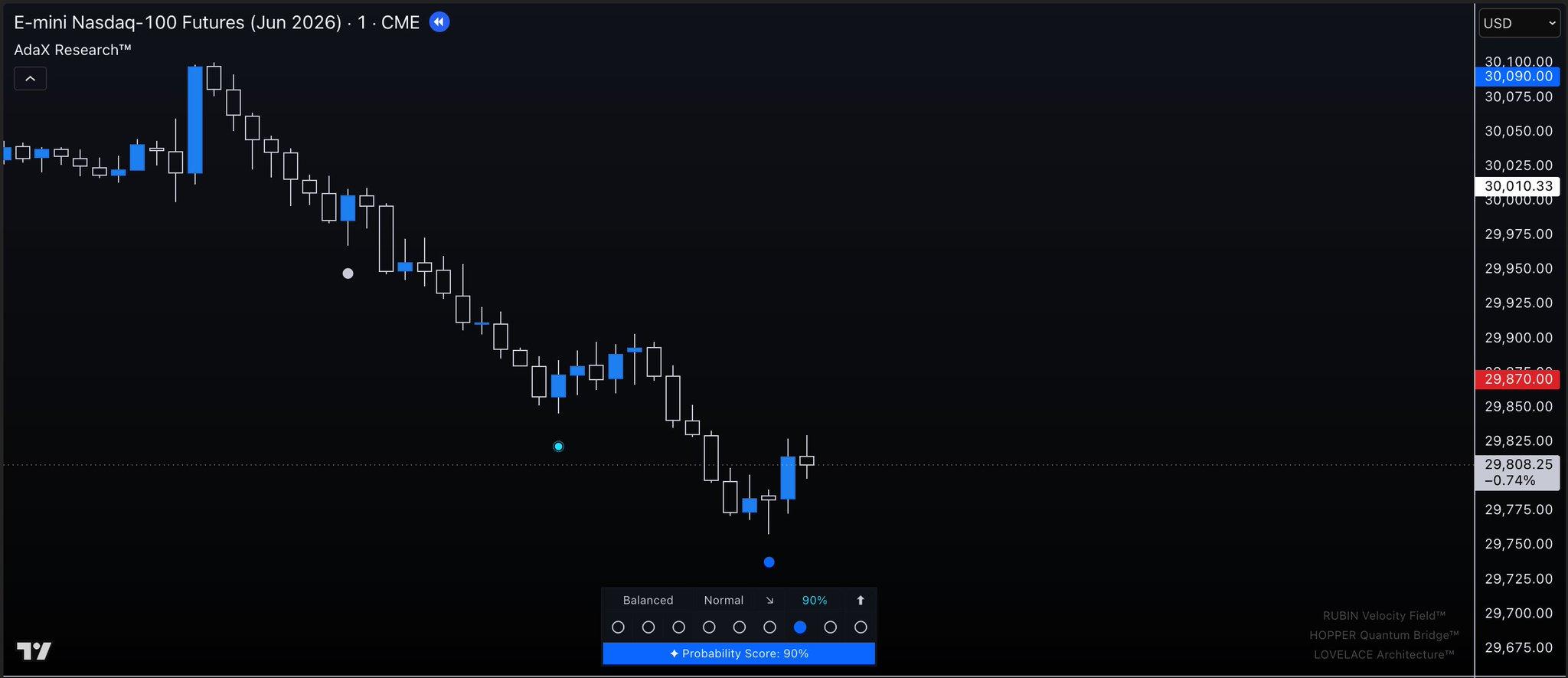
The first Rubin Velocity Field note begins inside a clean downside transition on the E-mini Nasdaq-100 futures one-minute chart. Price has already moved away from the upper structure, but the important question is not whether the candles are falling. Rubin asks whether the move has enough internal participation to qualify as motion.
The initial read sits in an absorbed normal condition with a 70% probability score. That is the first clue: pressure has entered the auction, but the model is still judging whether the auction is accepting the lower field or simply reacting into temporary imbalance.
Why The 90% Shift Matters
As the sequence develops, Rubin upgrades the read to balanced normal and the probability score reaches 90%. This is the difference between seeing a move and measuring the quality of the move. Participation density is no longer isolated around one displacement candle. It has started to support the structure of the transition.
The chart is useful because the score does not appear at the beginning of the decline as a blind directional opinion. It appears after the auction has supplied evidence: directional pressure, lower acceptance, and enough normal-state behavior to keep the motion coherent.
Resolution And Drift
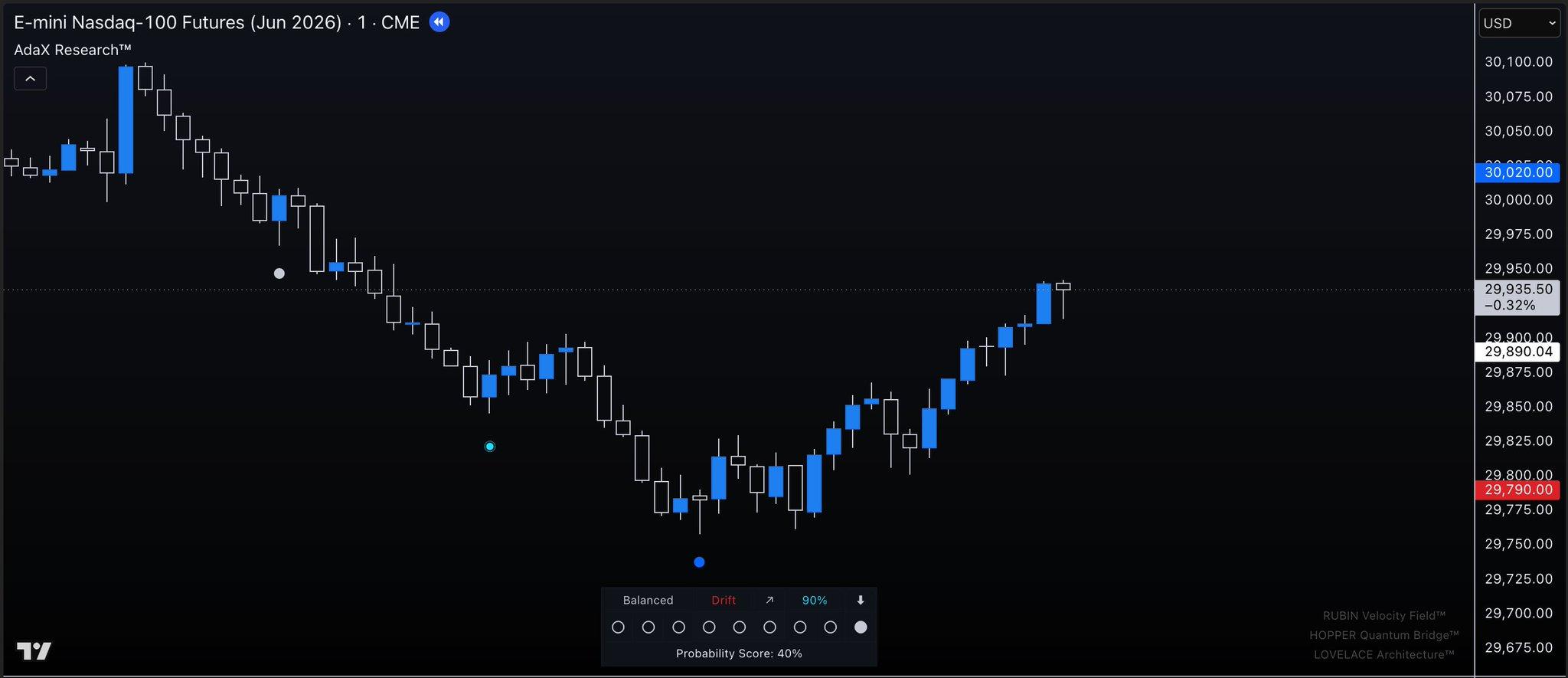
The later snapshot shows the market rotating higher after the downside field has already completed a meaningful excursion. Rubin marks the state as balanced drift with a lower 40% probability score. The message is subtle: once motion exhausts, the model should become less certain, not more confident because the prior move worked.
That is the architecture doing its job. Rubin is not a static signal overlay. It is a live motion layer that must recognize continuation, exhaustion, and rebalancing as separate states inside the same event.
Screenshot Sequence
Study the next state with Ada X Research.
Disclaimer: Ada X Research is for educational and research purposes only. Nothing shared is financial advice, investment advice, or a trading signal. Trading involves risk, and users are responsible for their own decisions.
Request access