Absorption After Displacement
A second NQ case studies what happens after a sharp downside displacement, where Rubin tracks whether flow is being absorbed, accepted, or prepared for reversal.
From Expansion To Test
The second note begins after a fast downside displacement from an earlier upper balance. The move is visually obvious, but Rubin is concerned with the next question: after displacement, does the auction keep accepting lower prices or does participation begin to thin out?
The first state shows balanced flow with a 55% probability score. That is not a command to assume continuation. It is a measured read that the auction has produced motion, but the participation profile is not yet strong enough to call the field fully resolved.
Absorption Becomes The Signal
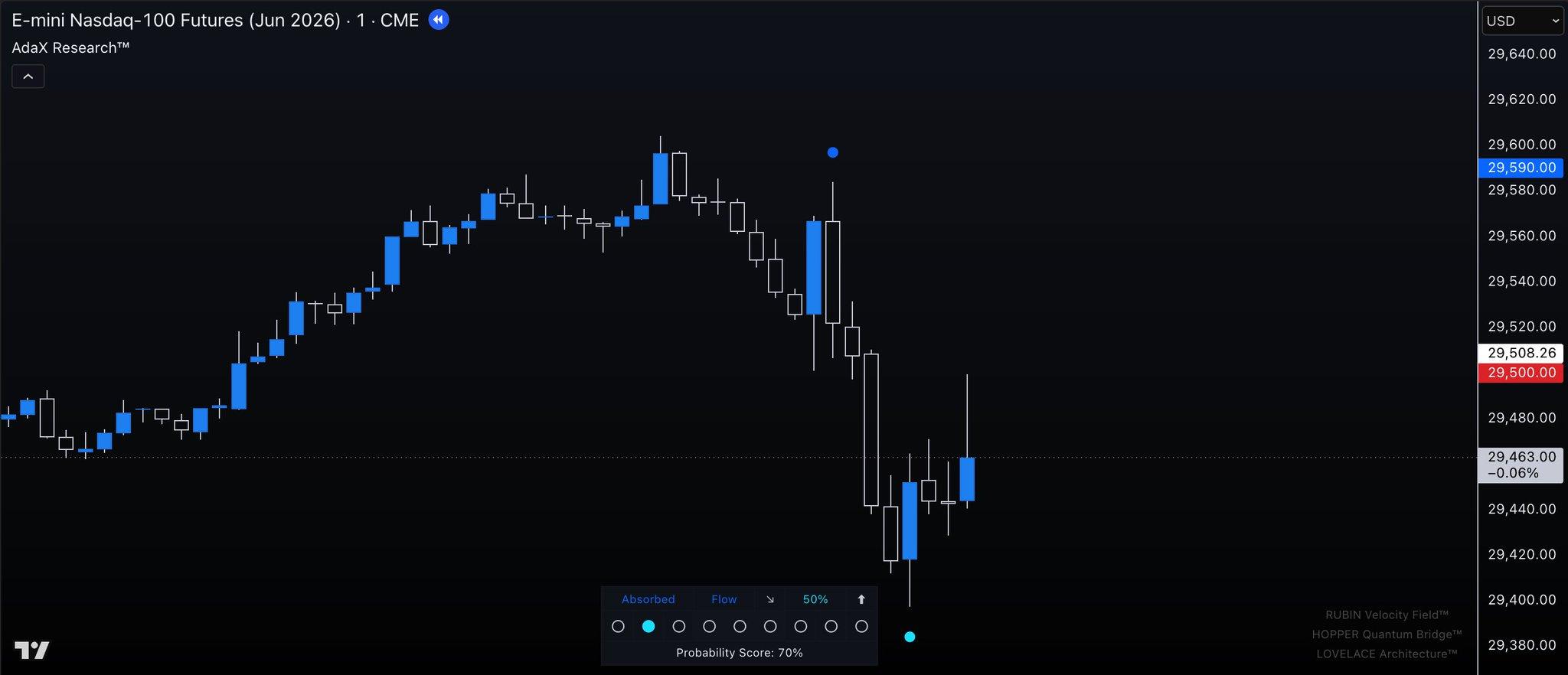
In the next snapshot, the field changes to absorbed flow and the probability score rises to 70%. This is the important transition. Rubin is identifying that the market is no longer just falling; it is negotiating the lower area with enough response to make the absorption itself meaningful.
Absorption matters because it can mark the boundary between continuation pressure and rebalancing pressure. A weak model treats the candle sequence as direction only. Rubin studies whether pressure is being accepted, resisted, or converted into a new motion candidate.
The Rebalance
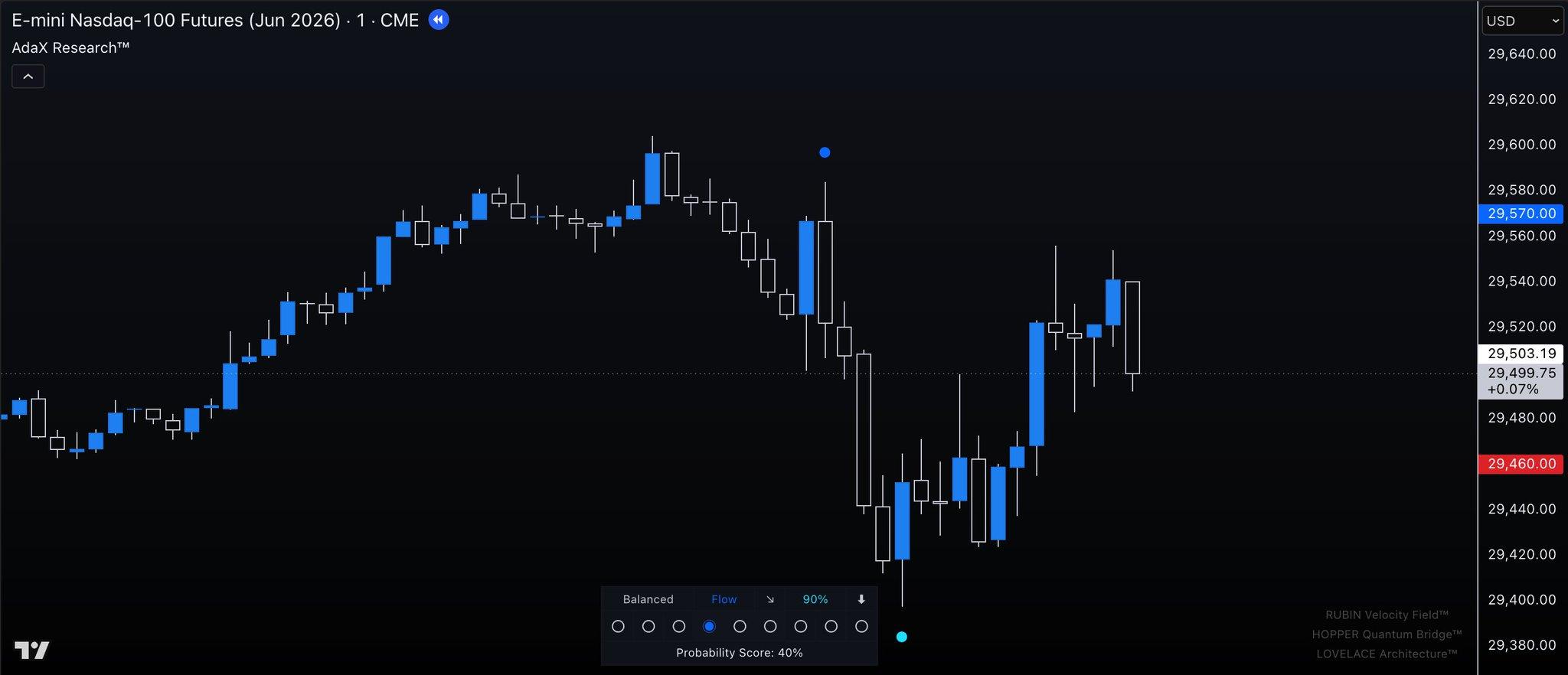
The final snapshot shows a sharp response away from the lower field and a later balanced flow read with a 40% probability score. The score drop is part of the story. Once the displacement is followed by response, Rubin no longer treats the lower-field pressure as the dominant motion thesis.
This case is less about predicting a reversal and more about recognizing when a market stops behaving like clean continuation. Motion quality changes first; the visible chart follows after.
Screenshot Sequence
Study the next state with Ada X Research.
Disclaimer: Ada X Research is for educational and research purposes only. Nothing shared is financial advice, investment advice, or a trading signal. Trading involves risk, and users are responsible for their own decisions.
Request access