When Rejection Turns Into Drift
A fourth NQ sequence shows a strong upside response losing acceptance, then transferring into a balanced drift condition as downside pressure takes control.
Acceptance Is The Test
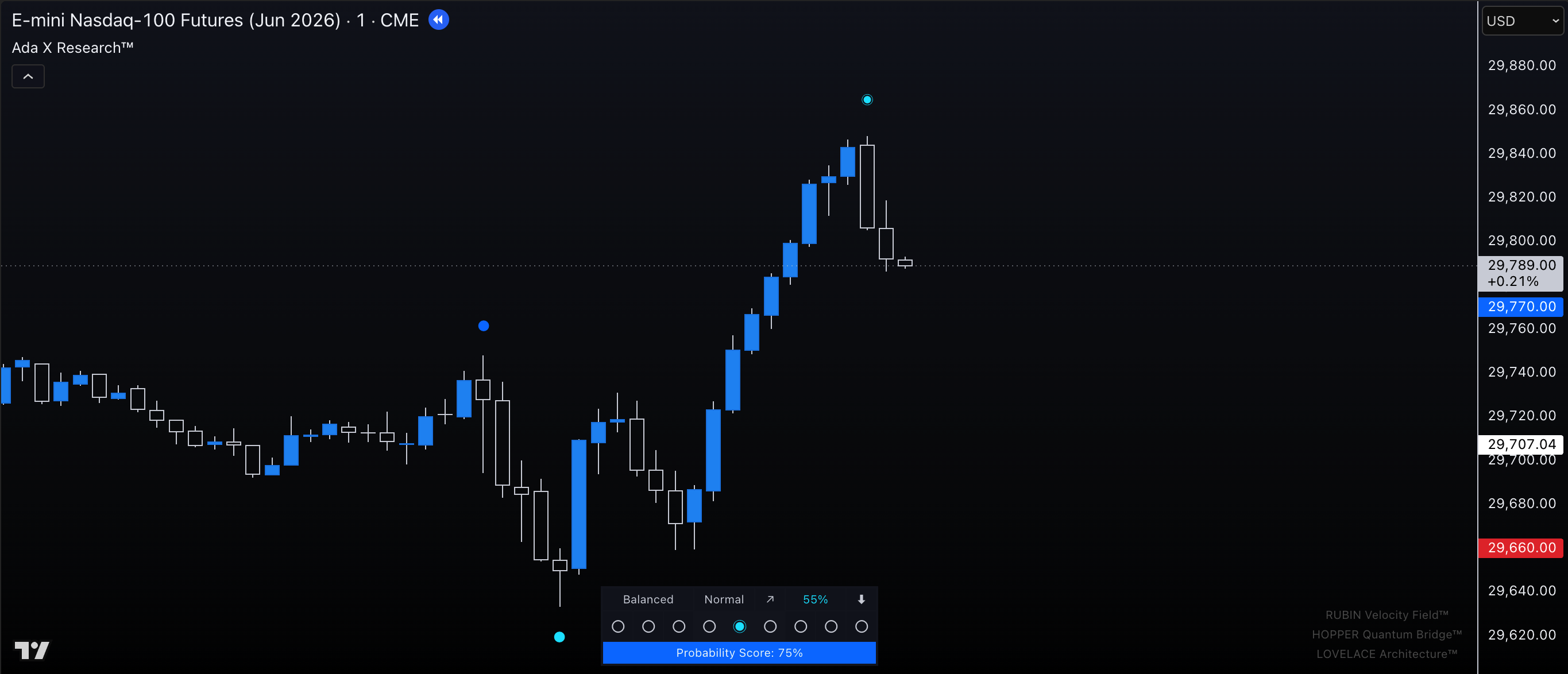
The fourth note begins after a strong upside auction response. Rubin reads the field as balanced normal with a 75% probability score, which means the response has measurable structure. The important test is whether the auction can keep accepting that higher field.
At this point, the chart is not asking for a bullish or bearish opinion. It is asking whether participation can remain coherent after price has already expanded away from the lower structure.
Rejection Changes The Field
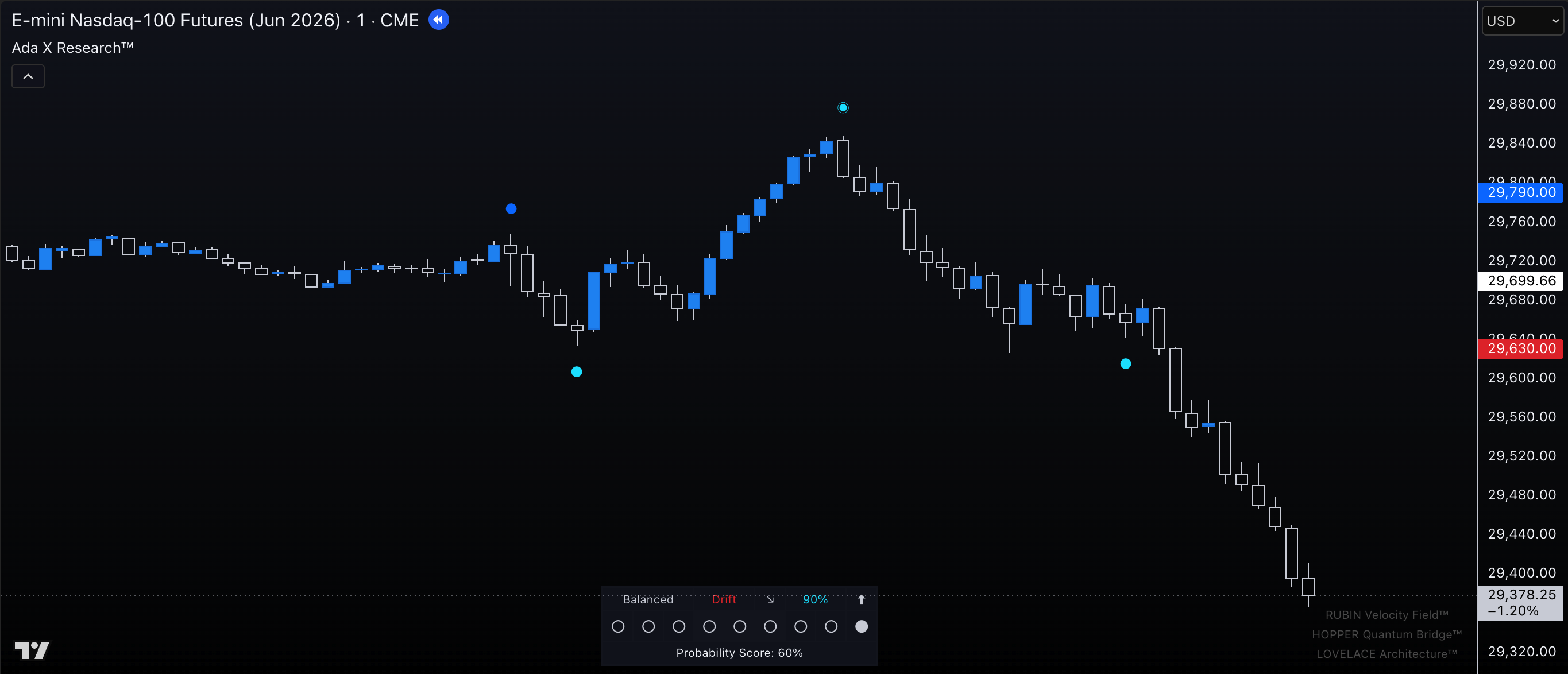
The later frame answers that question. The upper response loses acceptance and price begins a sustained downside migration. Rubin marks the environment as balanced drift with a 60% probability score, showing that the market has moved from resolved response into directional pressure.
Drift matters because it often develops after a prior expansion fails to hold. The auction does not need a dramatic reversal label; it needs evidence that pressure has begun to migrate and that participation is no longer supporting the previous field.
Why The Score Falls
The score drops from the earlier 75% read to 60% even while the downside move becomes visually larger. That is the point. Rubin is not rewarding distance alone. It is measuring the quality of motion as the auction transitions through acceptance, rejection, and continuation.
The field remains useful because it separates the completed upside response from the later downside drift. Those are different states, and treating them as one event would flatten the information the model is designed to preserve.
Screenshot Sequence
Study the next state with Ada X Research.
Disclaimer: Ada X Research is for educational and research purposes only. Nothing shared is financial advice, investment advice, or a trading signal. Trading involves risk, and users are responsible for their own decisions.
Request access