Early Balanced Drift Before Reversal Pressure
In this case study, Rubin reads a balanced drift state that is early and incomplete, then shows how the field matures into a sharper upside response.
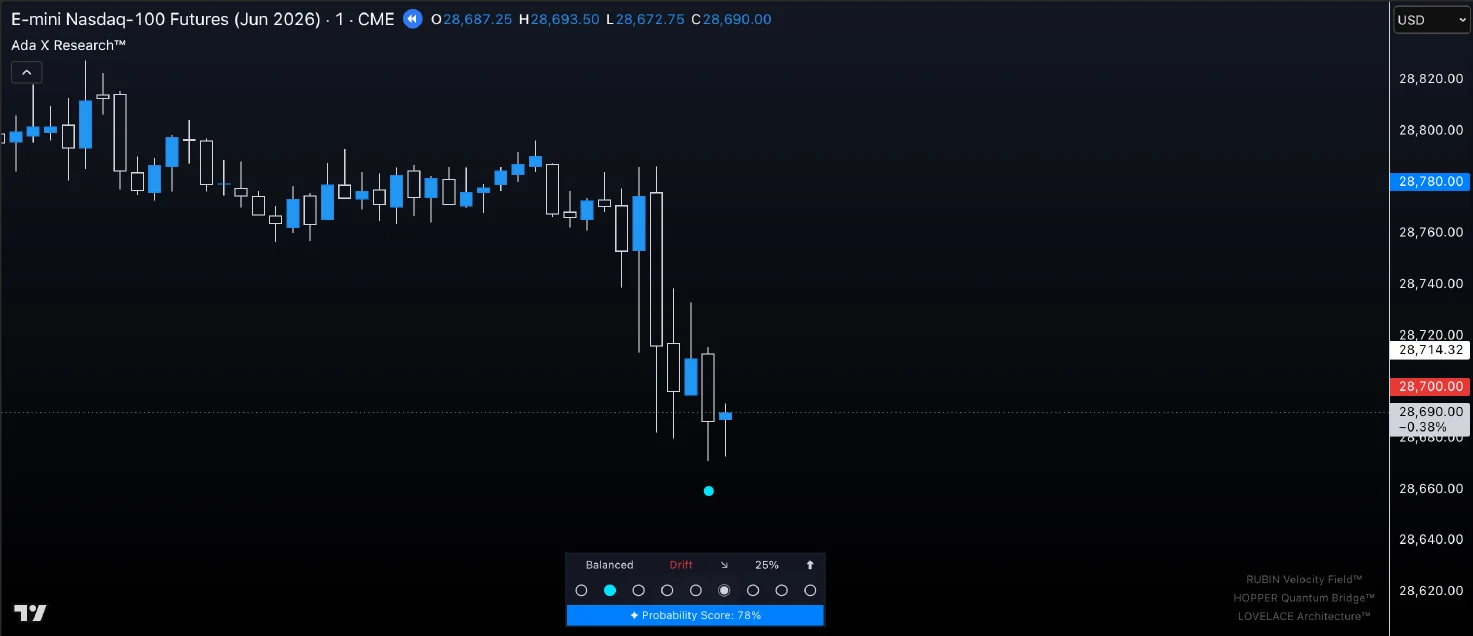
An Early Candidate, Not A Completed Move
This research starts after downside pressure has pushed NQ into a lower field. Rubin reads participation as balanced while motion begins to drift lower, and the dashboard shows a 78% probability score.
The document makes an important distinction: Grace's predictive calculation reads only a 25% attack rate to the upside. That means the setup is early. The probability architecture has found a candidate, but it has not yet matured into the kind of fully supported state that deserves to be treated as complete.
Why Early State Detection Matters
Early detection is useful because it changes what the trader studies. The first screenshot does not show a finished reversal. It shows that quantitative steps are beginning to agree while the market is still close to the low and the visible chart remains unsettled.
Rubin keeps that condition precise by labeling the field as balanced drift. Velocity is waning, but participation has not yet proven that the next stage will carry clean upside pressure. This is the difference between a research signal and a rushed conclusion.
Maturation From The Low
The resolution screenshot shows price responding from the low into a more developed state. The dashboard moves to absorbed drift with a 73% probability score, showing that the field has matured while still preserving uncertainty.
This case is useful because the model does not pretend the first read was enough on its own. It shows the path from early quantitative agreement into a more tradable response, and it keeps risk management central as the move matures.
Screenshot Sequence
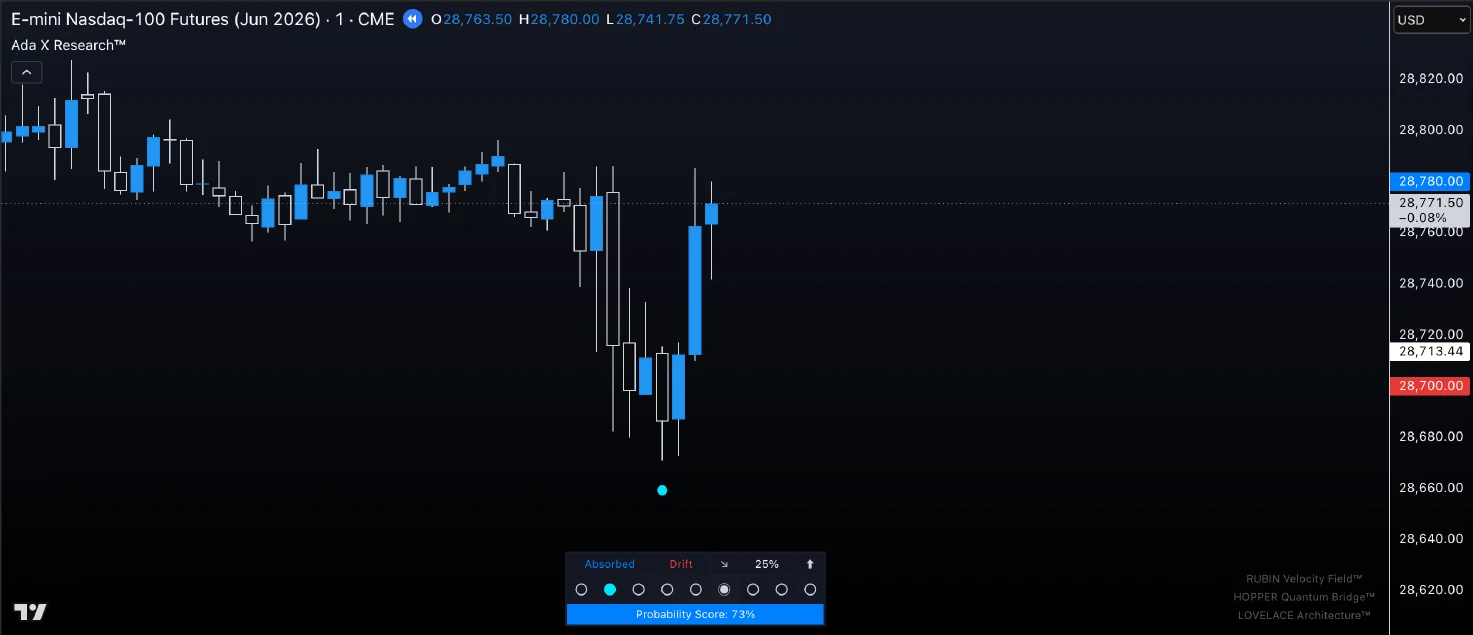
Study the next state with Ada X Research.
Disclaimer: Ada X Research is for educational and research purposes only. Nothing shared is financial advice, investment advice, or a trading signal. Trading involves risk, and users are responsible for their own decisions.
Request access